
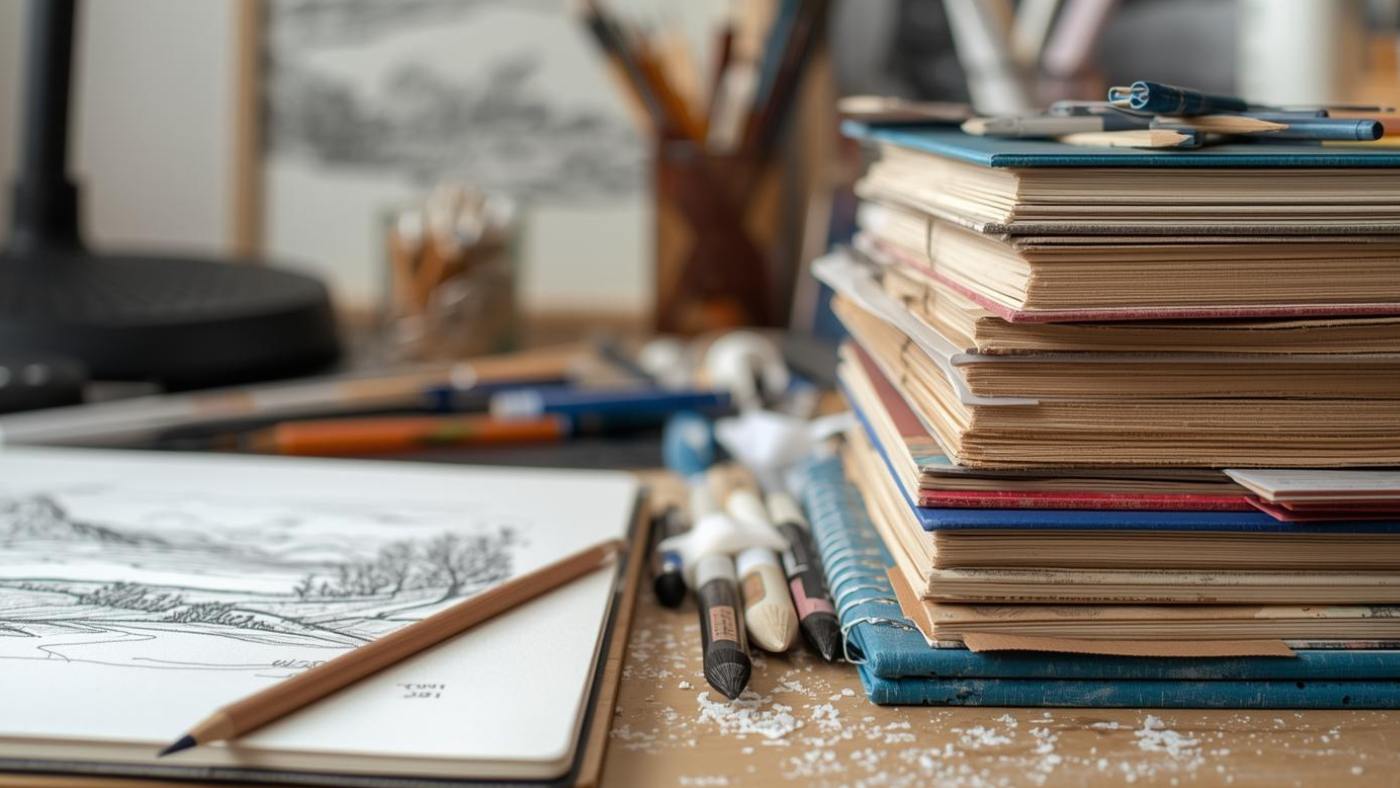
If you’re anything like me, you’ve got a wee stack of half-finished sketchbooks lurking in a drawer somewhere, all bought with good intentions and abandoned after three pages. We’re spoiled for choice these days: smooth, toothy, heavyweight, “mixed media,” bullet journal crossovers, spiral, stitched – it’s no wonder we end up confused and skint.
Some of the links in this post are affiliate links. This means I may earn a small commission if you choose to buy through them, at no extra cost to you. As an Amazon Associate, I earn from qualifying purchases.
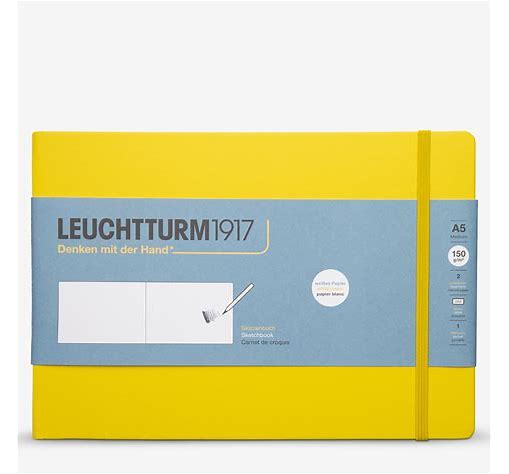
In this post, I’m talking through a few types of sketchbooks and papers I’ve tried over the years as a mixed media artist, and why I keep coming back to one favourite: the Leuchtturm1917 Hard Cover Sketchbook, Landscape A5, 150 gsm, 112 pages, in Lemon. It’s a bit on the pricey side, but it just works for how I paint and layer.
What Really Matters in a Sketchbook
Before we get into specific brands, it helps to know what actually makes a difference when you’re creating:
- Paper weight (gsm): For mixed media and acrylics, anything under 120 gsm tends to buckle, ghost, or just give up. Around 150–200 gsm is a sweet spot for everyday play.
- Paper surface:
- Smooth (good for pens, fine liners, detailed drawing).
- Slight tooth (ideal for pencils, coloured pencils, and dry media).
- Heavier texture (great for expressive, painterly marks, but can be annoying for small details).
- Binding:
- Hard cover stitched: feels like a proper “book,” lies fairly flat, great for long-term projects.
- Spiral: practical, folds back, but pages can tear out more easily and looks less “finished” on a shelf.
- Format: Portrait vs landscape, A5 vs A4. Landscape A5 is brilliant for quick spreads, thumbnails, and panoramic compositions.
Once you know what you like on these fronts, brands become easier to judge.
A Few Popular Sketchbook Types (And Their Quirks)
Over the years I’ve tried all sorts: cheap high street pads, “student” sketchbooks, fancy imported brands that made my bank account wince. A rough breakdown of what you’ll often find:
- Budget high street sketchbooks
Great if you’re just starting or want a “no pressure” book, but the paper is usually thin and unforgiving. Fine for pencil and biro, but the moment you bring in acrylic, markers, or ink, it wrinkles like mad. Good for doodling, not great for layered mixed media. - Mid-range “artist” sketchbooks
These are marketed for artists, often labelled 120–160 gsm. Some are lovely for pens, pencils, and light markers. Mixed media claims can be… optimistic. If you’re working with wet techniques or building heavy layers, they can still buckle or pill. - Watercolour sketchbooks
Brilliant if you’re mainly doing watercolour or gouache. The paper is usually 200–300 gsm and designed to take a lot of water. Downsides:- The texture can be a bit too rough for fine linework or writing.
- The books are heavier and bulkier.
For me, they’re more “project” books than everyday sketchbooks.
- Dedicated mixed media pads
Often work well with acrylic, markers, ink, and collage, but many of these come in pad form rather than a nice bound book. Great for tearing out, not as satisfying for keeping a visual diary.
All of that brings me back to the one I actually finish.
Why I Love the Leuchtturm1917 A5 Landscape Sketchbook
The Leuchtturm1917 Hard Cover Sketchbook, Landscape (A5), 150 gsm, 112 pages, Lemon has become my go-to book for mixed media and acrylic sketching. It’s not the cheapest option on the shelf, but there are a few reasons I keep buying it.
Paper weight and feel
The 150 gsm paper is a brilliant balance:
- Thick enough to handle acrylic, pencil, pen, and collage without feeling flimsy.
- Thin enough that you’re not left with a massive, heavy brick of a book.
It’s not watercolour paper, and it doesn’t pretend to be. If you flood it with watercolour washes, it’ll buckle and sulk. But for acrylic, mixed media, layering, and building up paint in a more controlled way, it behaves beautifully. You can push it quite far with acrylic paint, paint pens, Neocolor, and light scraping without destroying the surface.
(Image idea: Close-up of a painted spread showing layered acrylic and mark-making on the Lemon Leuchtturm pages.)
Surface and colour
The surface is smooth with just enough tooth so pencils and crayons still grip. It’s ideal if you like combining:
- Acrylic paint
- Paint markers
- Coloured pencils
- Ink pens for linework
Colours sit nicely on top without sinking in too much, and you can get decent opacity with acrylics without doing endless layers. For me, it’s a lovely “everyday sketchbook” paper – good enough to make proper work in, but not so precious you’re scared to mess up.
Format and binding
The landscape A5 format is surprisingly freeing. It’s small enough to be portable, but wide enough for:
- Double-spread compositions
- Abstract landscapes
- Sequential sketches or thumbnails
The hard cover feels solid and grown-up, and the binding lets the pages lie fairly flat, especially once you’ve broken the spine in a bit. It makes it comfortable to work across the centre.
(Image idea: Overhead shot of the sketchbook open on a double-page spread, with paint tubes or brushes around it.)
Price versus value
Is it cheap? No. You do feel it a bit at the till. But you’re getting:
- 112 pages of 150 gsm paper
- A proper hard cover
- A sketchbook that can actually take the kind of mixed media play many of us do
When you divide the cost by the number of pages and think about how much use you get out of it, it stops feeling ridiculous. It’s “a wee bit pricey” but good value if you genuinely use it.
The Big Catch: Not for Watercolour Lovers
Just to be clear: if your heart belongs to pure watercolour, this is not your soulmate. You can do the odd light wash or a bit of watery acrylic, but:
- Heavy washes will buckle the pages.
- Lifting and scrubbing will rough up the surface.
For full-on watercolour, I’d always point you to a proper watercolour sketchbook with 200–300 gsm paper. This Leuchtturm is much more at home with acrylic, gouache used fairly thick, collage, and layered mixed media.
Final Thoughts: You Need to Find Your Paper
The truth is, there’s no “perfect” sketchbook that suits every artist. We all work differently, and our sketchbooks need to match how we like to make marks. You might prefer:
- Rough, toothy paper for chunky charcoal.
- Smooth bright white for clean line art and markers.
- Heavy watercolour paper for juicy washes.
For me, as a 45-year-old mixed media artist who likes to layer acrylics, scribble, and generally batter the page a bit, the Leuchtturm1917 Hard Cover Sketchbook, Landscape A5, 150 gsm, 112 pages, in Lemon hits the sweet spot. A little on the pricey side, yes – but plenty of pages, a reasonable weight, and sturdy enough for building up layers without falling apart.
Your job is to try a few, pay attention to what you actually enjoy using, and then stick with the ones that make you excited to open them. When you find that sketchbook you keep reaching for, that’s when you know you’ve got “the one.”
Leave a Reply